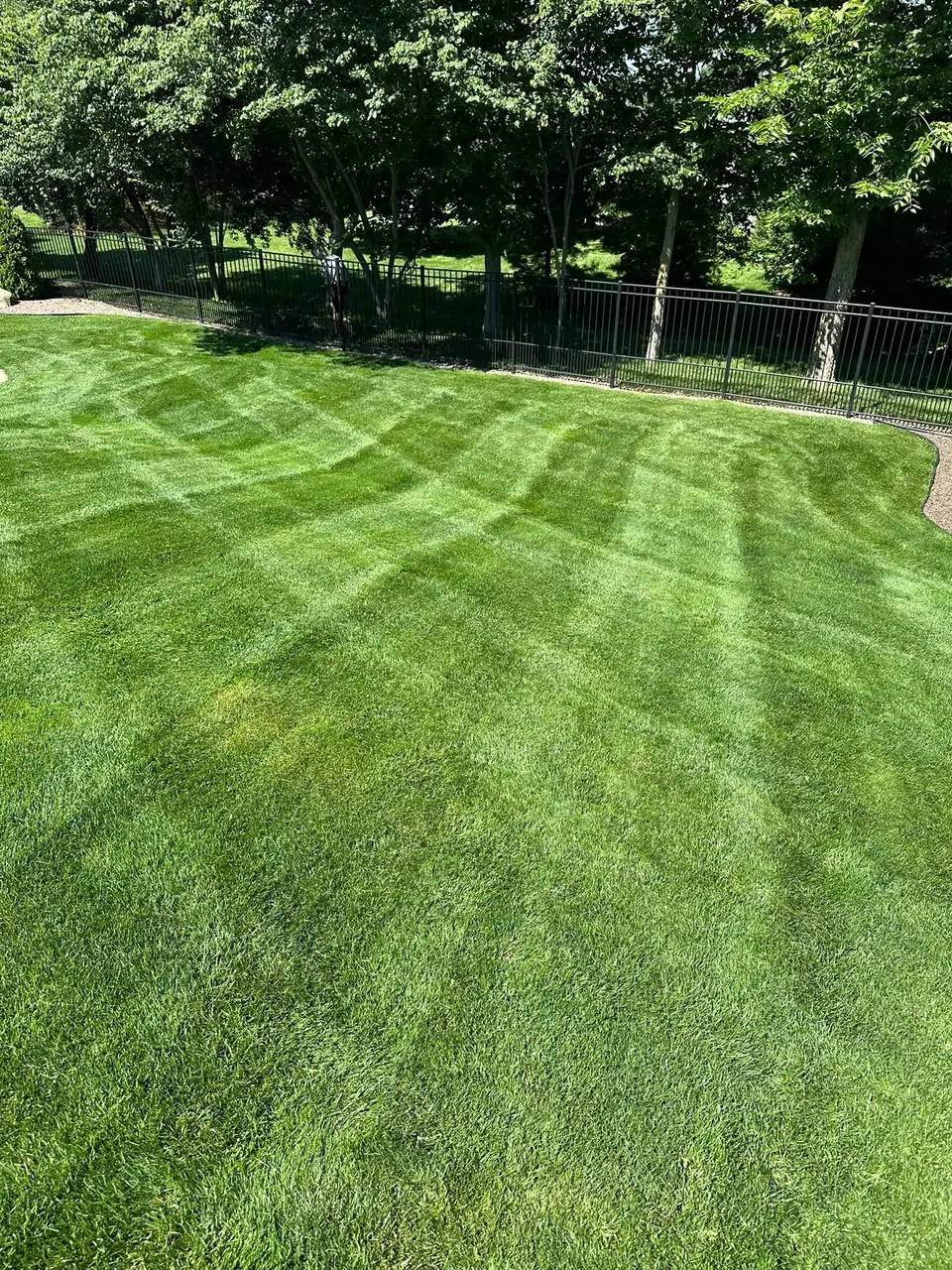
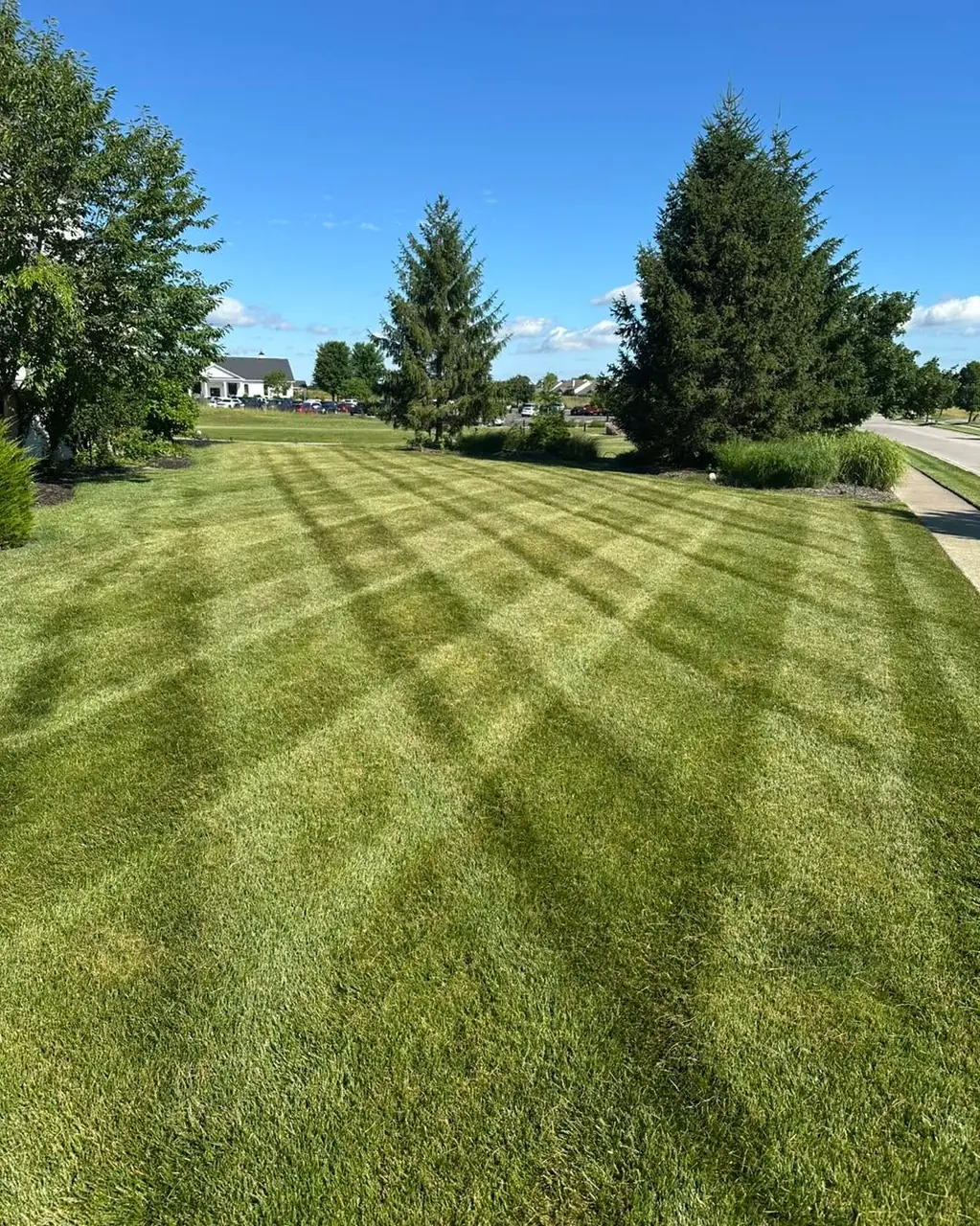
Whiteland is a small town that has grown quickly, and most of that growth is new houses on ground that was row crop a few years ago. If your lawn was installed by a builder in the last five years, we have almost certainly worked on one exactly like it a street over.
New-construction lawns are their own category of problem, and it is worth being honest about it: they usually look fine for one season and then start struggling. That is not bad luck and it is not something you did.
New-construction lawns and why they struggle
Building a house means scraping the topsoil off, driving heavy equipment across the lot for months, and then spreading a thin layer of soil back over compacted clay and laying sod or throwing seed on it. The turf on top is fine. What is under it is effectively a hardpan.
The symptoms are consistent across every subdivision here: water pools instead of soaking in, the lawn browns out early in summer because roots never got deep, and the sprinklers seem to run forever without helping. Runoff down the drive during a watering cycle is the clearest tell.
None of that is fixed by mowing, but mowing decisions make it much better or much worse. We keep the deck high so the turf shades its own root zone, and we push people toward deeper and less frequent watering, because shallow daily watering on compacted clay trains roots to stay right at the surface where the heat is.
Whiteland's newer subdivisions are also wide open. Nothing planted three years ago is casting shade yet, so these lawns take the full afternoon sun and the wind with no protection at all.